Live in productionNGO & social impact
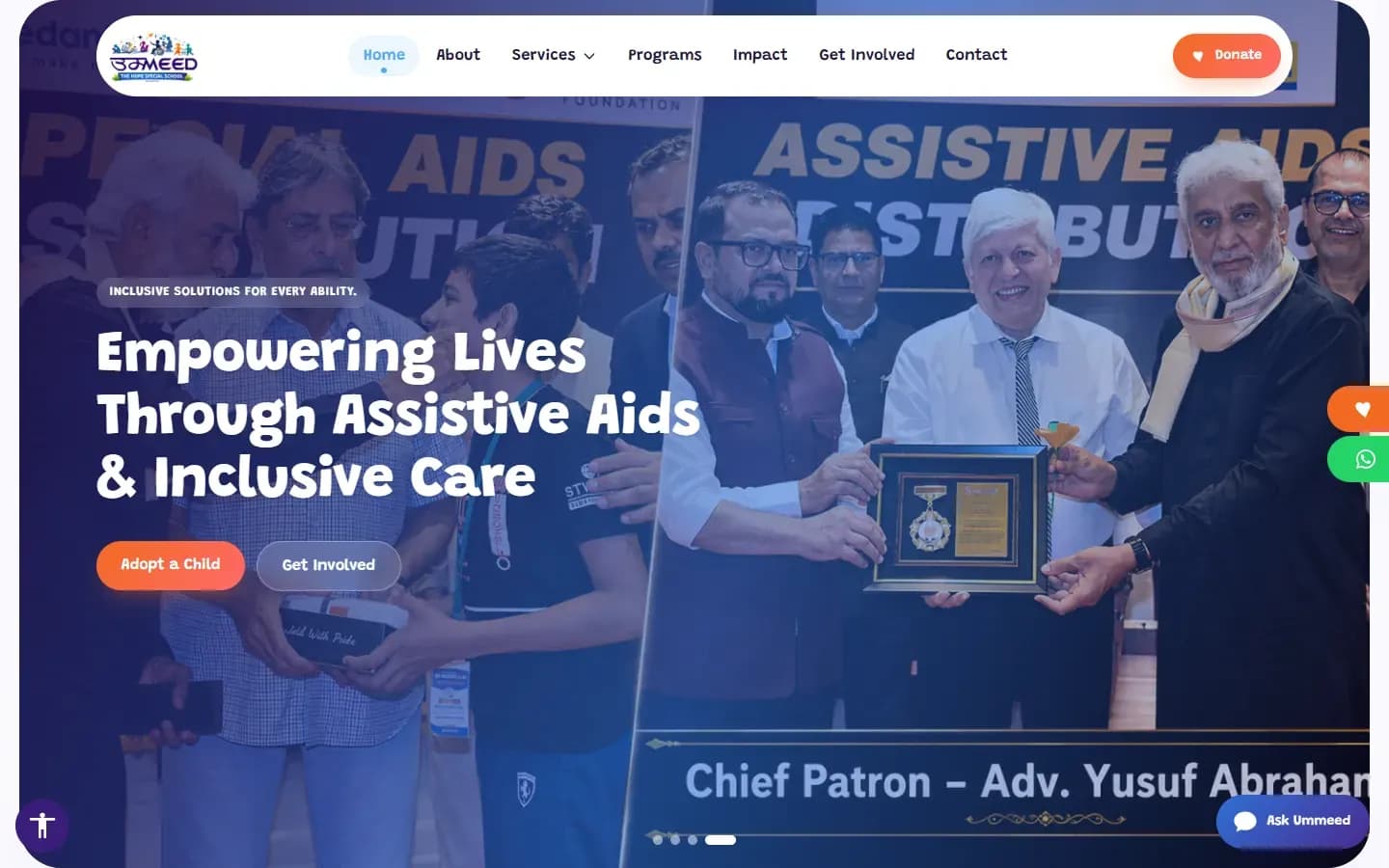
Ummeed — The Hope Special School
Special-needs school website with online donations and a self-service content manager.
- Websites
- Web applications
- AI & chatbots
- Business automation
A shared network for NGOs helping students afford admission fees, so the same student isn't funded five times over while others get nothing.
The challenge
EquiFlow is Pyzon's own product, built after we noticed a real, recurring problem across the NGOs we work with. These NGOs step in to help cover admission fees for students who've qualified for medical or engineering seats — for example, by clearing NEET or JEE — but whose families can't afford the fees on their own. The problem is that a student in this position doesn't apply to just one NGO for help; they apply to several, hoping at least one will cover their fees. Because none of these NGOs could see what the others were doing, the same student could end up receiving fee assistance from four or five different NGOs for the very same admission — even though they only needed one amount to cover it. Meanwhile, another student who was just as unable to afford their fees, but who only knew to apply to one or two organizations, could receive no help at all. The support wasn't going to whoever needed it most; it was going to whoever happened to apply everywhere. With no shared way to check whether a student had already received help elsewhere, this kind of duplication was invisible to every NGO involved, and money that could have helped more students afford their education was instead being spent multiple times on the same ones.
What we built
Built EquiFlow as a centralized platform where multiple NGOs register and operate independently, but share one common student record system verified by the student's Aadhaar number
When a student registers with one NGO, that record becomes visible to every other NGO on the network — so a quick Aadhaar lookup instantly shows whether the student has already received help before any new funds are approved
Added a public, self-service student registration flow secured with expiring tokens and email/phone OTP verification, removing manual intake
Built a structured approval pipeline (submit → document verification → approval/rejection → disbursement) with a full status-change audit trail
Added document upload and verification as part of the application itself, so supporting paperwork lives with the application rather than in someone's inbox
Gave each NGO its own configurable permissions, so organizations can define exactly who on their team can register students, verify documents, approve funds, or manage accounts
Added one-click, formatted Excel export so each NGO can report on and prove exactly where its money went
Key features
The result
More work
Special-needs school website with online donations and a self-service content manager.
A donation-driven charity website with online payments and an editable content admin panel.
A multi-program NGO platform where donors can support the specific cause they care about, with real transparency on where the money goes.
Start a project
There's a good chance we can reuse what we learned here. Tell us what you're building.